
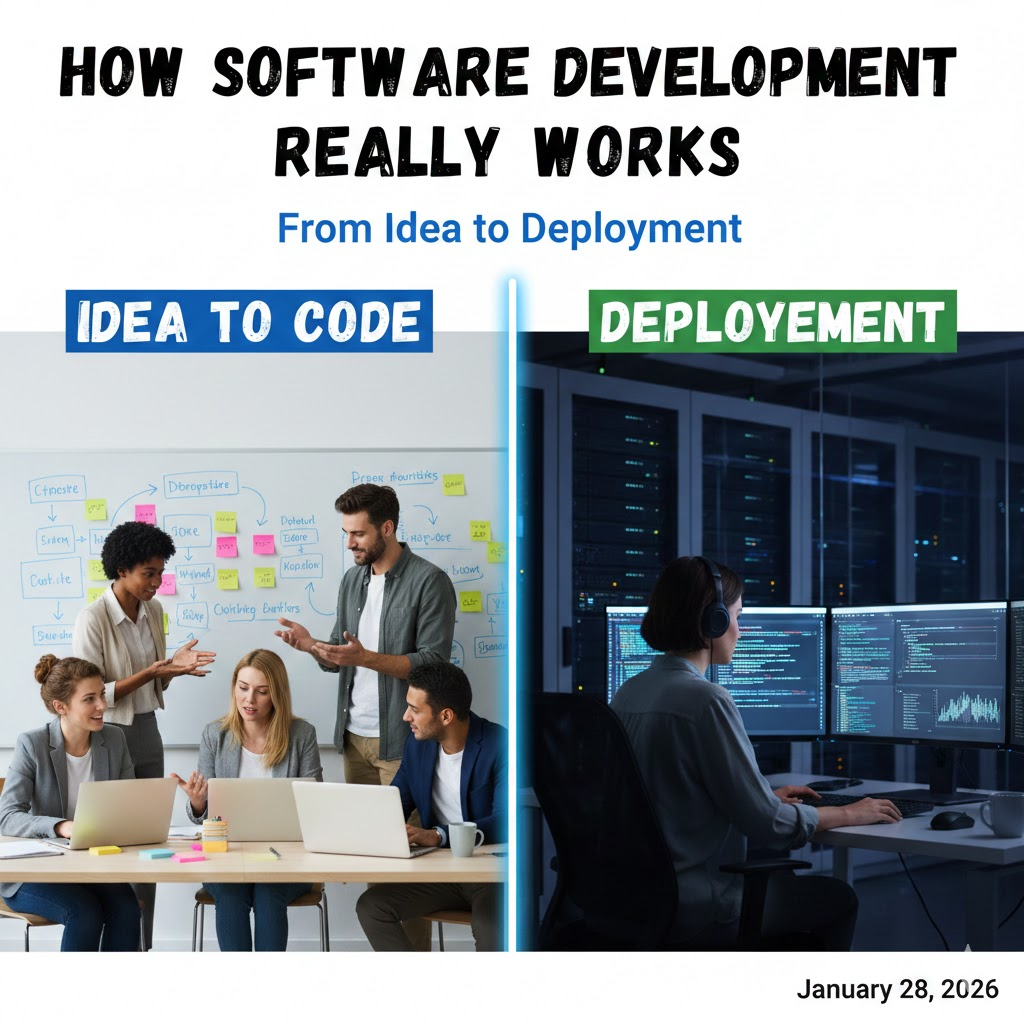
Software rarely begins with code. It starts with an idea, a problem that needs solving, or an opportunity to improve how something works. Many people imagine software development as mostly typing and building features, but the reality is far more structured and collaborative.
This article walks through how software development actually works, from the first idea to deployment and beyond.
The Idea and Problem Definition Stage
Every software product begins with a problem or need.
At this stage, teams focus on understanding:
- Who the users are
- What problem the software should solve
- Why existing solutions are not enough
Clear problem definition saves time later. Without it, teams risk building features that users do not need.
Planning and Requirement Gathering
Once the idea is clear, the next step is planning.
This includes:
- Defining core features
- Setting priorities
- Identifying technical constraints
- Estimating timelines and resources
Product managers, designers, and developers work together to turn abstract ideas into concrete requirements. This stage creates a shared understanding across the team.
Design and Architecture
Design focuses on how the software will look and how it will work internally.
User experience design ensures the product is easy to use. Technical architecture defines how components interact, how data is stored, and how the system scales.
Good design reduces complexity and makes future changes easier.
Development and Implementation
This is where coding happens.
Developers write code in small, manageable pieces. Features are built incrementally rather than all at once. Regular testing and reviews help catch issues early.
Collaboration is key. Developers frequently communicate, review each other’s work, and adjust based on feedback.
Testing and Quality Assurance
Testing ensures the software behaves as expected.
This stage includes:
- Manual testing by quality teams
- Automated tests for critical functionality
- Performance and security checks
Testing is not about finding perfection. It is about reducing risk before release.
Deployment and Release
Deployment is the process of making the software available to users.
Modern teams use automated pipelines to:
- Build and package the software
- Run tests
- Deploy updates safely
Releases may be gradual, allowing teams to monitor performance and respond quickly if issues appear.
Monitoring and Maintenance
Deployment is not the end.
After release, teams:
- Monitor performance and errors
- Collect user feedback
- Fix bugs and improve features
Software evolves continuously based on real world usage.
How Teams Work Together
Software development is a team effort.
Successful teams rely on:
- Clear communication
- Documentation
- Feedback loops
- Shared responsibility
Collaboration between developers, designers, testers, and stakeholders is what turns ideas into reliable products.
Frequently Asked Questions
How long does software development usually take
The timeline depends on the scope and complexity of the project. Simple applications can take weeks, while large systems may take months or longer. Development is often ongoing rather than a one time effort.
Do all projects follow the same development process
No. Teams adapt their process based on project needs, team size, and constraints. Some follow structured approaches, while others work more flexibly.
Why is testing important if the software already works
Testing helps identify edge cases, prevent regressions, and ensure reliability. Software that appears to work can still fail under real world conditions.
What happens if users do not like the final product
User feedback is part of the process. Teams iterate, improve features, and adjust based on real usage rather than assuming the first version is final.
Is deployment risky
Deployment carries some risk, but modern tools and practices help reduce it. Monitoring and rollback options allow teams to respond quickly if problems arise.
Final Thoughts
Software development is not a straight line from idea to code. It is a cycle of learning, building, testing, and improving.
Understanding how software really works behind the scenes helps set realistic expectations and highlights the value of collaboration, planning, and continuous improvement.
Great software is not just built. It is refined over time through thoughtful design and real world feedback.