
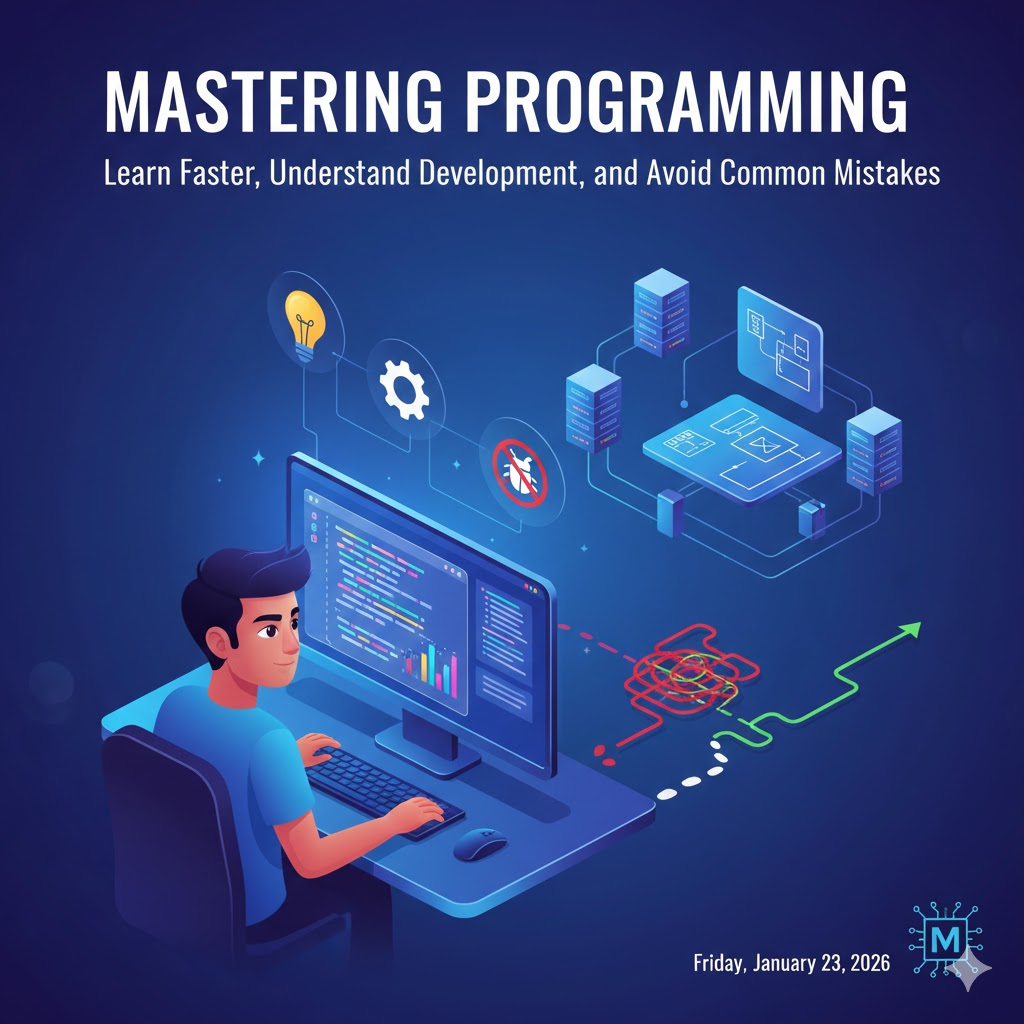
Programming is an essential skill in today’s digital world. Whether you’re a beginner or an experienced developer, learning efficiently, understanding development roles, and avoiding common mistakes are crucial for growth. In this article, we’ll explore how to learn programming faster, break down frontend vs backend development, and highlight common programming mistakes and how to avoid them.
How to Learn Programming Faster Without Feeling Overwhelmed
Learning programming can feel daunting, especially when faced with countless languages, frameworks, and resources. However, with the right approach, you can accelerate your learning without burnout. Here’s how:
1. Start with a Clear Goal
Before diving into code, identify why you want to learn programming. Is it web development, data analysis, or app creation? Having a clear goal will help you focus on the languages and tools that matter most. For example, aspiring web developers should start with HTML, CSS, and JavaScript.
2. Break Learning into Small Chunks
Instead of trying to learn everything at once, divide your learning into manageable sections. Focus on one concept at a time, practice it, and then move to the next. This prevents cognitive overload and makes it easier to retain knowledge.
3. Hands-On Practice Is Key
Programming is a skill, not just theory. Reading tutorials isn’t enough—you must write code regularly. Build small projects like a personal website, a calculator, or a simple game. These projects reinforce concepts and give a sense of accomplishment.
4. Learn to Debug Effectively
Debugging is part of programming. Don’t get frustrated by errors; instead, see them as learning opportunities. Understand what went wrong, research solutions, and fix issues. Over time, this improves problem-solving skills.
5. Use Online Resources Wisely
There are countless online courses, YouTube tutorials, and forums. Choose a few trusted resources rather than hopping between too many. Websites like FreeCodeCamp, Codecademy, and Stack Overflow are excellent for beginners.
6. Join a Community
Programming can feel isolating. Joining communities like GitHub, Reddit, or Discord coding groups allows you to ask questions, share projects, and learn from others. Peer support accelerates growth and keeps motivation high.
Frontend vs Backend Development Explained in Plain Language
When learning programming, you’ll often hear about frontend and backend development. While both are essential, they serve different purposes.
What Is Frontend Development?
Frontend development refers to the visual part of a website or application that users interact with. It’s everything you see on the screen—buttons, images, text, and animations. Frontend developers use technologies like:
- HTML: Structures content
- CSS: Styles the content
- JavaScript: Adds interactivity
Think of the frontend as the “face” of a website—it must be visually appealing, responsive, and user-friendly.
What Is Backend Development?
Backend development powers the behind-the-scenes functionality of an application. It handles databases, servers, and application logic. Backend developers ensure that everything users see works correctly. Common backend technologies include:
- Python, Java, or PHP: Programming languages
- SQL or MongoDB: Databases
- Node.js or Django: Frameworks for server-side logic
If frontend is the face, backend is the brain. It processes requests, stores data, and ensures smooth performance.
Full-Stack Development
Some developers work on both frontend and backend, known as full-stack developers. They have a broad understanding of web applications, making them highly versatile.
Understanding the difference helps beginners focus on the area that aligns with their career goals.
Common Programming Mistakes and How Developers Avoid Them
Even experienced developers make mistakes. However, learning to identify and avoid them is vital for efficiency and code quality. Here are the most common programming pitfalls:
1. Not Planning Before Coding
Jumping straight into coding without planning leads to messy, hard-to-maintain code. Solution: Outline your project, define the structure, and break tasks into small steps before writing any code.
2. Ignoring Error Handling
Many beginners ignore errors, thinking they’ll “figure it out later.” This creates bugs and crashes. Solution: Always anticipate potential errors and implement proper error handling.
3. Writing Overly Complex Code
Complex code might seem impressive, but it’s hard to read and maintain. Solution: Follow the KISS principle (Keep It Simple, Stupid). Simple, clean code is easier to debug and collaborate on.
4. Skipping Version Control
Not using version control can be disastrous if code is lost or corrupted. Solution: Use tools like Git to track changes and collaborate with other developers.
5. Copying Code Blindly
Copy-pasting solutions from Stack Overflow or tutorials without understanding them is common. Solution: Use external code as a reference, but always understand and modify it for your needs.
6. Neglecting Testing
Skipping testing can lead to hidden bugs and unreliable software. Solution: Write unit tests, integration tests, or manually test your code. Testing ensures your application works under different conditions.
7. Overlooking Documentation
Documentation may seem boring, but it’s essential for collaboration and future reference. Solution: Comment your code and maintain clear documentation to make it understandable for yourself and others.
By recognizing these mistakes early, developers can save time, reduce frustration, and create high-quality, maintainable code.
FAQ
What is the best way to learn programming faster?
The best way to learn programming faster is to focus on consistency rather than speed. Set a clear goal, practice coding daily, and build small real projects. Learning by doing helps you understand concepts better and reduces confusion.
Which programming language should beginners start with?
Beginners should start with a language that matches their goals. For web development, HTML, CSS, and JavaScript are ideal. For general programming and logic building, Python is a great choice due to its simple syntax and wide use.
What is the difference between frontend and backend development?
Frontend development focuses on what users see and interact with, such as layouts, buttons, and designs. Backend development handles data, servers, databases, and application logic that work behind the scenes to power the frontend.
Is frontend development easier than backend development?
Frontend development is often easier for beginners because results are visible quickly. Backend development involves more logic and data handling, which can feel complex at first. Neither is better, it depends on personal interest and strengths.
Can I learn frontend and backend at the same time?
Yes, you can learn both gradually. However, beginners usually benefit from starting with one area first. Once comfortable, learning the other becomes much easier and helps you move toward full stack development.
What are the most common mistakes beginners make in programming?
Common mistakes include skipping planning, copying code without understanding it, avoiding debugging, not testing code, and ignoring version control tools like Git.
How can I avoid making programming mistakes?
To avoid mistakes, plan before coding, write simple and readable code, test your work regularly, and take time to understand errors instead of ignoring them. Practicing debugging is one of the most important skills.
Do I need to be good at math to learn programming?
Basic math is enough for most programming tasks. Logical thinking and problem solving are more important than advanced mathematics, especially for web and application development.
How long does it take to become good at programming?
The timeline varies for each person. With regular practice, beginners can build confidence in three to six months. Mastery takes longer and comes with real world projects and continuous learning.
Is programming still a good career choice?
Yes, programming remains a strong career option with high demand across industries. Skills in frontend, backend, and full stack development offer excellent job opportunities and growth potential.
Conclusion
Mastering programming isn’t about rushing—it’s about learning smartly, understanding different development roles, and avoiding common pitfalls. Start with small, focused goals, practice hands-on projects, and engage with developer communities to accelerate your learning.
Understanding the distinction between frontend and backend development helps you choose the right path, while avoiding common mistakes ensures your code is reliable and efficient.
With patience, structured learning, and consistent practice, anyone can become a confident and skilled programmer. Remember, programming is a journey, and every mistake is a step toward mastery.