
Cryptocurrency has matured a lot over the past decade, but in 2026 it still carries real risks that investors, businesses, and everyday users cannot ignore. While crypto offers innovation, decentralisation, and financial freedom, it also comes with volatility, security challenges, and regulatory uncertainty.
Understanding these risks is not about avoiding crypto altogether. It is about learning how to manage them smartly. This article explains the real risks of cryptocurrency in 2026 in simple terms and offers practical ways to reduce potential losses.
Why Understanding Crypto Risks Matters in 2026
Crypto adoption is higher than ever. More institutions, governments, and individuals are using digital assets for payments, investing, and decentralised finance. At the same time, cybercriminals, scammers, and market manipulators have become more sophisticated.
In 2026, the crypto market rewards knowledge and punishes ignorance. Knowing the risks helps you make informed decisions instead of emotional ones.
Market Volatility Risk
Cryptocurrency prices are still highly volatile compared to traditional assets. Even established coins can experience sudden price swings due to news, regulations, or market sentiment.
Why Crypto Is So Volatile
Crypto markets run 24 hours a day and react instantly to global events. Factors like social media trends, whale activity, and macroeconomic changes can move prices rapidly.
How to Manage Volatility Risk
You can reduce volatility risk by:
- Avoiding emotional buying and selling
- Investing only what you can afford to lose
- Using dollar cost averaging instead of lump sum investing
- Diversifying across different assets
Long term strategies often perform better than short term speculation.
Regulatory and Legal Risks
Regulation remains one of the biggest uncertainties in cryptocurrency in 2026. Different countries apply different rules, and these rules can change quickly.
How Regulations Impact Crypto
Regulatory changes can affect exchanges, stablecoins, privacy coins, and decentralised platforms. New laws may restrict usage, increase taxes, or limit access in certain regions.
How to Manage Regulatory Risk
To stay protected:
- Keep track of crypto regulations in your country
- Use compliant and reputable exchanges
- Maintain proper transaction records for tax purposes
- Avoid platforms that operate in legal grey areas
Staying informed is your best defence against regulatory surprises.
Security and Hacking Risks
Crypto is digital, and anything digital can be hacked. In 2026, hackers continue to target exchanges, wallets, and smart contracts.
Common Security Threats
Some of the most common threats include:
- Exchange hacks
- Phishing attacks
- Malware and fake wallet apps
- Smart contract exploits
Once stolen, crypto is often impossible to recover.
How to Reduce Security Risks
Strong security habits make a huge difference.
- Use hardware wallets for long term storage
- Enable two factor authentication
- Never share private keys or recovery phrases
- Double check website URLs before connecting wallets
Security is not optional in crypto. It is essential.
Scam and Fraud Risks
Scams remain a major issue in the crypto space. In 2026, scams are more polished and harder to spot, especially on social media and messaging platforms.
Common Crypto Scams in 2026
Popular scam types include:
- Fake investment opportunities
- Impersonation of influencers or support teams
- Rug pulls in new projects
- Phishing links promising free tokens
If something sounds too good to be true, it usually is.
How to Avoid Crypto Scams
You can protect yourself by:
- Researching projects thoroughly
- Avoiding guaranteed returns
- Never clicking unknown links
- Verifying official sources before taking action
A healthy level of skepticism can save you from costly mistakes.
Technology and Smart Contract Risks
Blockchain technology is powerful but not flawless. Bugs in smart contracts or blockchain protocols can lead to loss of funds.
Why Smart Contracts Can Fail
Smart contracts are written by humans, and humans make mistakes. Even audited contracts can contain hidden vulnerabilities that attackers exploit.
How to Manage Technology Risks
To reduce exposure:
- Use well established platforms
- Avoid investing heavily in untested protocols
- Spread funds across multiple platforms
- Follow security updates and community alerts
Caution is especially important in decentralised finance.
Liquidity Risks
Not all cryptocurrencies are easy to buy or sell. Low liquidity can trap investors during market downturns.
How Liquidity Affects Investors
If a token has low trading volume, you may struggle to sell it at a fair price. This risk is common with new or obscure projects.
How to Reduce Liquidity Risk
Managing liquidity risk includes:
- Sticking to well traded assets
- Checking daily trading volume before investing
- Avoiding hype driven low cap tokens
Liquidity matters just as much as potential returns.
Psychological and Emotional Risks
Crypto markets can trigger fear, greed, and stress. Emotional decision making often leads to losses.
Common Emotional Mistakes
Some frequent emotional errors include panic selling, chasing pumps, and overtrading.
How to Stay Emotionally Disciplined
You can stay grounded by:
- Creating a clear investment plan
- Setting realistic goals
- Taking breaks from price charts
- Focusing on long term value
Mental discipline is an underrated skill in crypto.
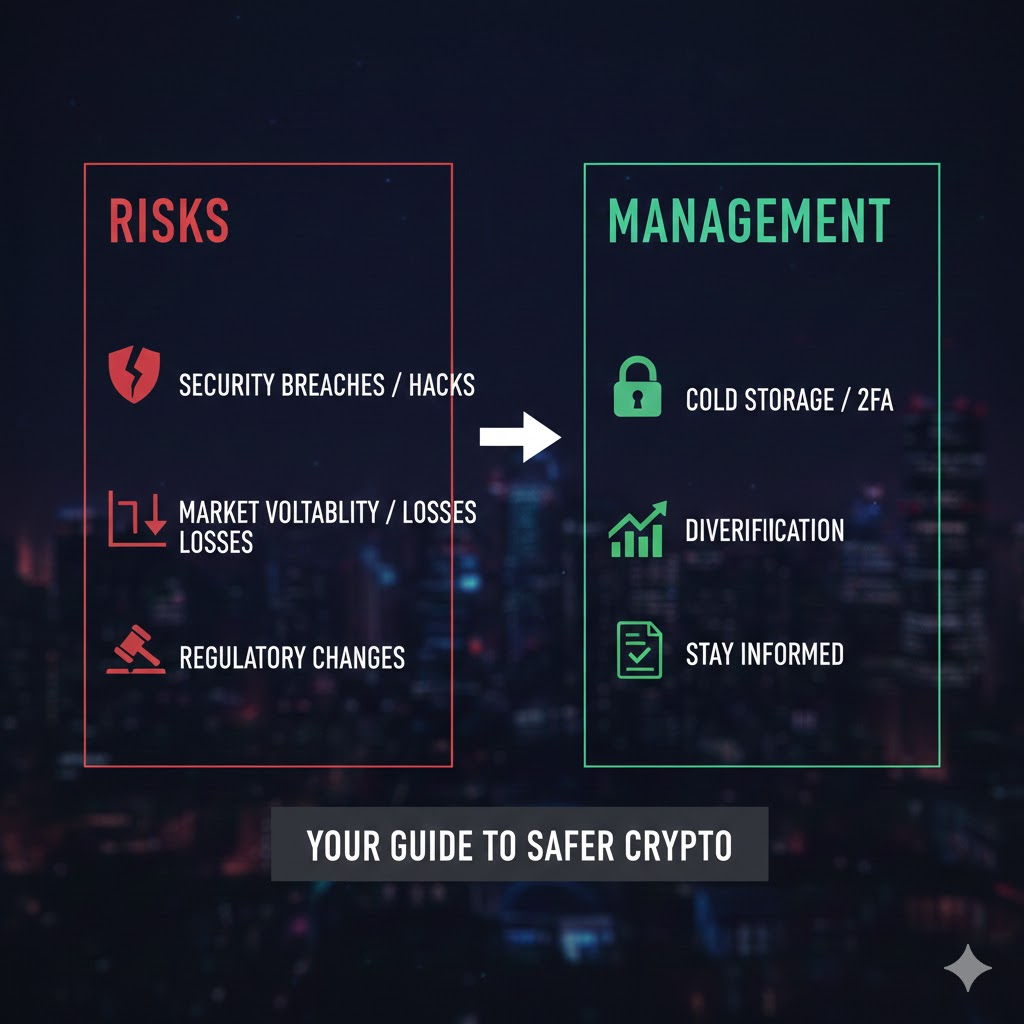
How to Build a Safer Crypto Strategy in 2026
Managing crypto risks does not require perfection. It requires balance, awareness, and preparation.
A safer approach includes diversification, strong security practices, continuous learning, and patience. Crypto rewards those who treat it seriously, not those who gamble blindly.
FAQs About Cryptocurrency Risks in 2026
Is cryptocurrency still risky in 2026?
Yes, crypto still carries risks, including volatility, security threats, and regulatory changes. However, better tools and education make these risks more manageable.
Can crypto be part of a safe investment strategy?
Crypto can be part of a diversified portfolio if risks are understood and exposure is limited to an amount you can afford to lose.
What is the biggest crypto risk today?
Security and scams remain among the biggest risks, especially for users who do not follow proper safety practices.
Are stablecoins risk free?
No, stablecoins carry risks related to regulation, reserves, and issuer transparency. They are generally less volatile but not risk free.
How can beginners reduce crypto risks?
Beginners should start small, use trusted platforms, secure their wallets properly, and focus on learning before investing heavily.
Will crypto risks decrease in the future?
Some risks may reduce as regulation and technology improve, but new risks will likely emerge as the industry evolves.
Final Thoughts
Cryptocurrency in 2026 is more advanced, more accessible, and more complex than ever. The risks are real, but they are not unmanageable. By understanding where the dangers lie and taking practical steps to reduce exposure, you can navigate the crypto space with greater confidence and control.
In crypto, knowledge is not just power. It is protection.