
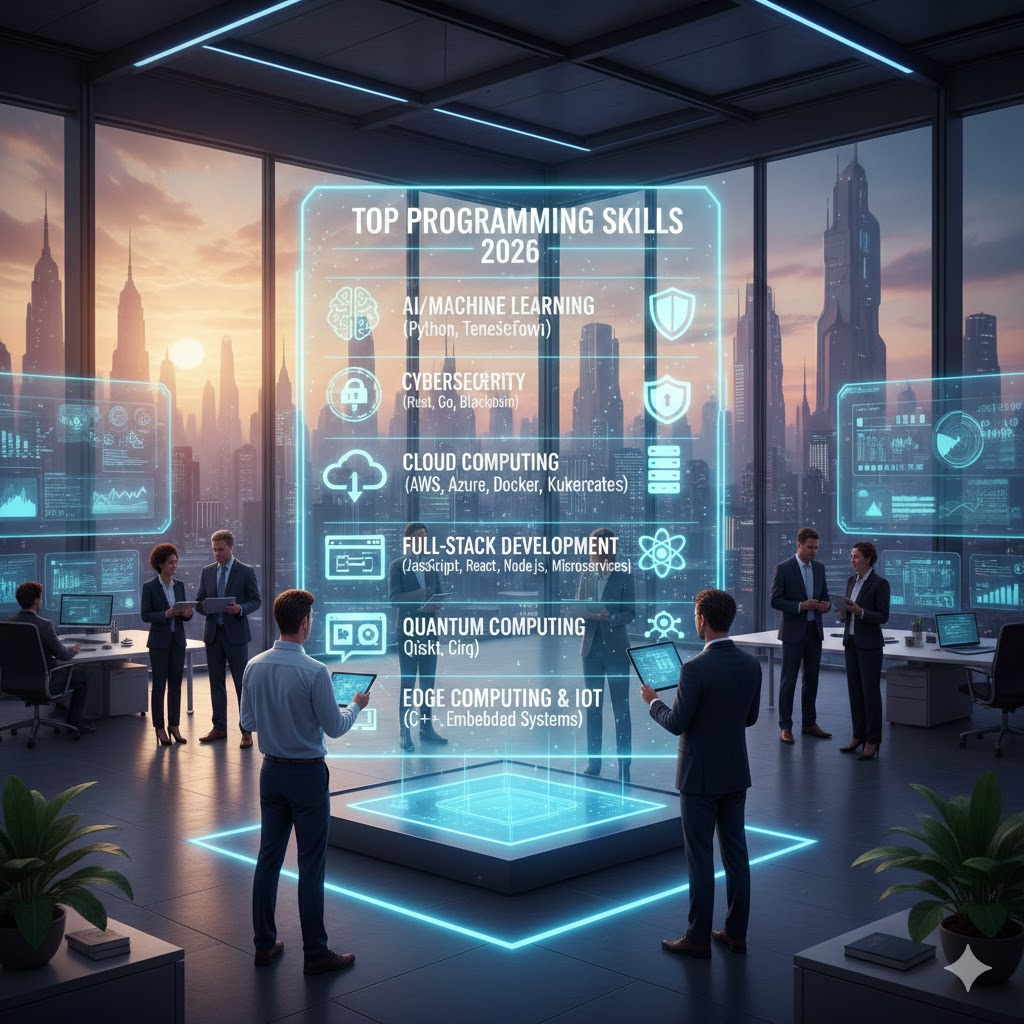
The tech industry never stands still, and neither do the skills that employers demand. In 2026, programming remains a fundamental career asset, but the specific skills that employers value have evolved. Whether you’re starting out, switching careers, or leveling up, understanding these trends can make your path clearer and more strategic.
This guide breaks down the most in-demand programming skills employers want in 2026, why they matter, and how you can begin building them.
Why These Skills Matter in 2026
As technology integrates deeper into every industry, employers look for programmers who can:
- Build and maintain scalable systems
- Solve real-world problems with efficient code
- Work collaboratively in diverse teams
- Adapt to new tools and frameworks
- Understand both software and business value
Coding alone is no longer enough — context, creativity, and adaptability set top candidates apart.
1. Proficiency in Core Programming Languages
While languages come and go, some continue to be foundational:
- Python — versatile, beginner-friendly, strong in data, AI, and automation
- JavaScript — essential for web development (frontend + backend)
- Java / C# — widely used in enterprise, backend systems, and large apps
- Go / Rust — rising for systems programming, performance, and safety
Employers want programmers who can write clean, maintainable code and choose the right language for the job.
2. Web Development: Frontend & Backend
Full-stack development continues to be a top skill:
- Frontend: HTML, CSS, JavaScript frameworks (React, Vue, Angular)
- Backend: Node.js, Django (Python), Ruby on Rails, ASP.NET
- APIs: RESTful and GraphQL services to connect frontend/backends
Developers who understand the full web stack bring flexibility and faster delivery.
3. Database Skills
Data drives decisions, and programmers need to manage it well:
- SQL databases: PostgreSQL, MySQL, Microsoft SQL
- NoSQL databases: MongoDB, Redis
- Query optimization and data modeling are highly valued
Employers seek developers who can handle data reliably and efficiently.
4. Cloud Computing and DevOps Basics
Modern apps run in the cloud. Knowledge of platforms and workflows matters:
- Cloud platforms: AWS, Azure, Google Cloud
- Containers: Docker
- Orchestration: Kubernetes
- CI/CD pipelines for automated testing and deployment
Developers who understand cloud and deployment workflows help teams ship faster and more reliably.
5. Understanding of AI and Machine Learning
AI is integrated into more products and services than ever:
- Python libraries: TensorFlow, PyTorch, Scikit-Learn
- Model training basics and data preprocessing
Even basic AI skills give candidates a competitive edge.
6. Version Control and Collaboration Tools
Employers expect professional workflows:
- Git and GitHub/GitLab
- Branching strategies
- Pull requests and code reviews
These skills show that you can work effectively in teams.
7. Software Architecture and System Design
As projects grow, structure matters:
- Modular design
- Scalability and performance considerations
- Understanding tradeoffs in distributed systems
Strong architecture skills help developers build applications that last.
8. Security-Focused Mindset
Security isn’t optional:
- Secure coding practices
- OWASP principles
- Input validation, encryption basics
Employers want developers who can prevent vulnerabilities before they cause problems.
9. Testing and Quality Assurance
Code that works once is good. Code that stays reliable is great:
- Unit testing, integration testing
- Test frameworks (Jest, PyTest, JUnit)
- Test automation
Test-oriented developers reduce bugs and improve product quality.
10. Soft Skills That Complement Coding
Technical skills open the door. Soft skills help you succeed:
- Problem-solving and logical thinking
- Communication with technical and non-technical teams
- Time management and task prioritization
- Adaptability and curiosity
A well-rounded programmer adds value beyond code.
How to Build These Skills as a Beginner
Start with the Basics
Choose one core language (like Python or JavaScript) and focus on fundamentals.
Build Real Projects
Hands-on experience beats theory. Build small apps, tools, or websites.
Learn Version Control Early
Start using Git from your first project.
Explore Cloud and Deployment
Deploy your apps to AWS, Azure, or Google Cloud to understand real workflows.
Practice Collaboration
Contribute to open source or work with peers to simulate real teams.
Frequently Asked Questions (FAQ)
What programming language should I learn first in 2026?
Python and JavaScript are excellent starting points due to their versatility and demand.
Is web development still relevant in 2026?
Yes, web development remains one of the most widely used skills across industries.
Do I need AI knowledge to get a programming job?
Not for all roles, but basic AI understanding gives you an edge and opens more opportunities.
How important are soft skills compared to coding skills?
Soft skills are equally important; they help you communicate, collaborate, and grow professionally.
What is the best way to prepare for coding interviews?
Practice real coding problems, understand system design basics, and learn how to explain your thinking clearly.
Final Thoughts
In 2026, employers value programmers who are versatile, dependable, and thoughtful. Mastering core languages, understanding system design, working with modern tools, and communicating effectively will put you ahead in any job search.
Remember: consistent practice and smart learning habits matter more than trying to learn everything at once.