 dev
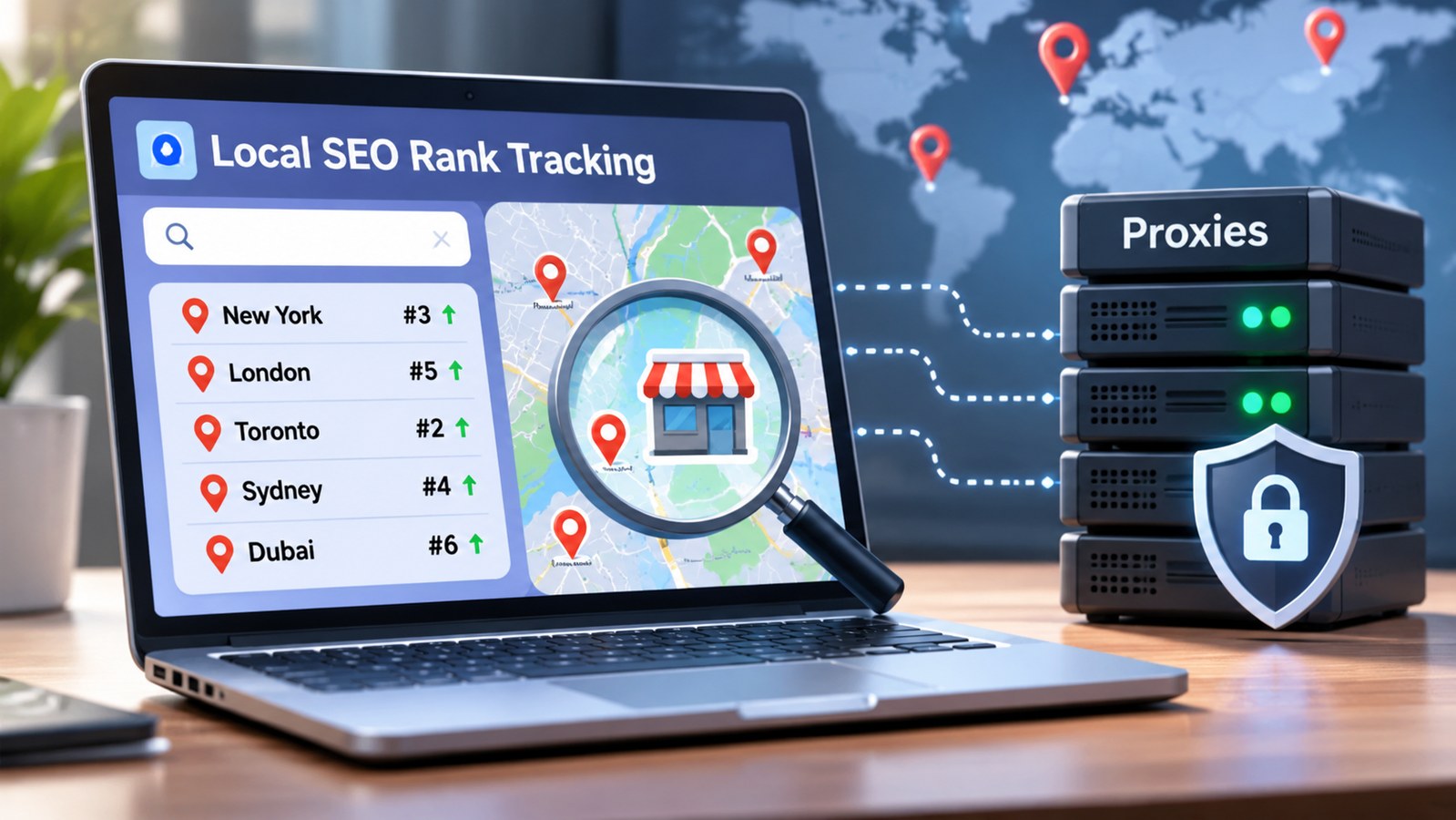
A business ranking on the first page of Google in one city does not necessarily mean it will receive the same visibility in another location. Search results can change depending on where someone searches, what they are looking for and how search engines interpret their location.
For businesses serving multiple cities, this creates an important challenge. A company might appear among the top results in Chennai but struggle to gain visibility in Bangalore, Mumbai or Hyderabad. Without checking rankings from different locations, it becomes difficult to understand how well a website performs across its target markets.
This is where proxies become useful.
Proxies allow digital marketing professionals to conduct searches through IP addresses associated with different geographic locations. Instead of relying on search results from one network, agencies can perform location based checks to understand how websites appear in different cities.When used correctly, proxies can make local search monitoring more organised and provide useful information for marketing decisions.
In this guide, we will explain why search rankings vary between cities, how proxies support local ranking analysis and how to configure a practical workflow for tracking search visibility across multiple locations.
Why Do Google Rankings Change Between Cities?
Search engines do not always display identical results to every user. Even when two people search for exactly the same keyword, their results may differ.
Location is one of the important factors influencing local search results.
For example, consider a company offering digital marketing services in India. Someone searching for a digital marketing agency in Chennai may see Chennai based businesses, local directories and relevant service providers.
A person performing the same search from Bangalore may receive a different set of results.
This happens because search engines attempt to provide information that is relevant to the searcher’s circumstances.
Several factors contribute to these differences.
1. Geographic Location
Location plays a major role in searches involving local services.
When someone searches for terms such as:
- Best dentist near me
- Plumber in Chennai
- Digital marketing agency in Mumbai
- Restaurants in Bangalore
- Web development company in Hyderabad
Google attempts to identify businesses that are relevant to the specified location or the searcher’s approximate location.
A business located in Chennai may have stronger visibility for Chennai related searches than for searches performed in Mumbai.
This does not necessarily mean its website has poor optimisation. It may simply have stronger geographic relevance in its primary service area.
2. Google Business Profile Information
A company’s Google Business Profile can influence its visibility in local search results.
Business information such as its address, service areas, business category, operating hours and customer reviews can help Google understand its local relevance.
For example, a dental clinic with an established business profile in Anna Nagar may appear for relevant searches around that neighbourhood.
However, its visibility may decrease when someone searches from another part of Chennai.
Marketing teams should monitor both website rankings and Google Business Profile performance when evaluating local visibility.
3. Search Intent
Not every search has the same intention.
Someone searching for “best SEO agency” may be looking for general information or comparing service providers.
Another person searching for “SEO agency in Chennai” has expressed a more specific geographic requirement.
Search engines interpret these queries differently.
Even without a city name in the search phrase, Google may consider the user’s location when deciding which businesses to display.
4. Local Competition
Competition also changes from one city to another.
A business may face only a few established competitors in one location but encounter dozens of strong companies in another.
For example, a website ranking in the top three positions for a local service keyword in Coimbatore may struggle to reach the first page for the same service in Mumbai.
The difference could be related to competing websites, business authority, local content, reviews and other ranking signals.
5. Search History and Personalisation
Search history, device settings and other personalisation signals can influence the results shown to users.
This means two people in the same city may not always see exactly the same search results.
For consistent monitoring, marketing professionals should use a controlled testing environment and record the search location, keyword, device type and date.
What Are Proxies and How Do They Help With Local Rank Tracking?
A proxy server acts as an intermediary between your device and the website you are accessing.
When you connect through a proxy, your request reaches the destination website through the proxy server rather than directly through your regular internet connection.
Depending on the proxy service, the outgoing IP address may be associated with a particular country, region or city.
This makes proxies useful for conducting geographic search checks.
Imagine you manage a website targeting five Indian cities:
- Chennai
- Bangalore
- Hyderabad
- Mumbai
- Delhi
Instead of conducting every search through your regular internet connection, you can use appropriately located proxy connections to perform separate checks for each market.
This helps you observe how search results differ across locations.
Understanding the Role of Residential Proxies
Residential proxies use IP addresses associated with residential internet connections.
They can be useful for local search research because they provide access through networks associated with different geographic areas.
For example, a marketing agency might use a residential proxy associated with Bangalore to check how a particular service keyword appears from that location.
However, selecting a city in a proxy dashboard does not guarantee that every search engine will interpret the connection as being physically located there.
IP geolocation databases can contain inaccurate or outdated information. Therefore, always verify the actual outgoing IP location before recording ranking results.
Step by Step: How to Set Up Proxies for Local SEO Rank Tracking
Setting up a reliable local ranking workflow does not require complicated infrastructure. The important part is to maintain consistent settings and record your results properly.
Here is a practical process.
Step 1: Identify Your Target Cities
Start by identifying the locations where your business wants to attract customers.
Do not select cities randomly. Focus on actual business markets, service locations and areas where your company has the capacity to serve customers.
For example, a company offering web design services might target:
| City | Target keyword |
|---|---|
| Chennai | Web design company in Chennai |
| Bangalore | Web design company in Bangalore |
| Hyderabad | Web design company in Hyderabad |
| Mumbai | Web design company in Mumbai |
| Pune | Web design company in Pune |
Create a separate keyword list for every location.
You should also include general keywords that do not contain city names because search engines may interpret them differently depending on the searcher’s location.
Step 2: Select the Appropriate Proxy Type
The next step is choosing a proxy service that supports your research requirements.
Residential proxies are useful when you want to check how results appear through geographically distributed residential connections.
Datacenter proxies may be suitable for technical testing and other research activities where the destination website permits their use.
ISP proxies can provide a more consistent IP connection when your monitoring setup requires a stable network identity.
Before purchasing a plan, evaluate:
- Available geographic locations.
- City level targeting support.
- Connection stability.
- Authentication options.
- Bandwidth limits.
- Supported protocols.
- Pricing structure.
Different proxy providers offer different levels of geographic coverage.
Your choice should depend on the locations you need to monitor rather than the number of IP addresses advertised.
Step 3: Configure Your Proxy Connection
Once you have selected a provider, obtain the connection details.
These generally include:
- Proxy hostname or IP address.
- Port number.
- Username.
- Password.
- Supported protocol.
Depending on the provider, you may also receive a gateway address that automatically selects an IP from the available network.
You can configure the proxy through your browser, operating system or compatible research application.
For a simple manual setup, open your browser’s network or proxy settings and enter the credentials supplied by your provider.
If your proxy service supports geographic targeting through session credentials, select the required location according to its configuration instructions.
For example, use a connection associated with Chennai for the Chennai ranking check and a separate connection associated with Bangalore for the Bangalore check.
Step 4: Verify the Proxy Location
Never assume that the selected proxy location is correct without testing it.
After connecting, visit an IP information service to identify the outgoing IP address and its reported geographic location.
Check the following:
- Whether the outgoing IP has changed.
- Whether the reported country is correct.
- Whether the city information is available.
- Whether the connection is stable.
- Whether the proxy authentication is working.
If the provider offers several IP locations within one city, you may need to test more than one connection to understand the available coverage.
Remember that IP geolocation is an approximation. It does not guarantee that a search engine will display results exactly as someone physically located in that city would see them.
Step 5: Prepare Your Keyword Tracking Sheet
Before conducting searches, organise your keywords.
A simple spreadsheet can help you compare rankings across multiple locations.
For example:
| Keyword | Chennai | Bangalore | Hyderabad | Mumbai |
|---|---|---|---|---|
| SEO agency | 4 | 9 | 12 | 18 |
| Digital marketing company | 3 | 7 | 15 | 11 |
| Website development services | 6 | 5 | 14 | 20 |
| PPC management company | 8 | 12 | 16 | 9 |
These numbers are illustrative examples rather than actual ranking data.
Record the date, search location, device type and search settings alongside every result.
This makes it easier to identify ranking improvements and declines over time.
Step 6: Perform Searches From Each Location
Now you can begin your location based ranking checks.
Connect through your selected proxy and perform searches using your prepared keyword list.
For each location:
- Establish the proxy connection.
- Verify the outgoing IP address.
- Open the search engine.
- Enter the target keyword.
- Record the website’s organic position.
- Note any local business listings or map results.
- Save the date and location of the check.
Repeat the process for every target city.
Avoid changing several variables simultaneously. Keep the device type, language and search settings consistent wherever possible.
For larger campaigns, use a rank tracking platform that supports geographic targeting instead of relying entirely on manual searches.
Also follow the search engine’s automated query policies and use approved data collection methods.
Step 7: Compare Rankings Across Locations
Once you have collected the results, compare the performance of each keyword across cities.
Look for patterns rather than focusing on a single ranking position.
For example:
- Is the website performing better in its main service area?
- Are certain keywords ranking consistently across multiple cities?
- Which locations have the weakest visibility?
- Are competitors appearing more frequently in particular markets?
- Have rankings improved after publishing location specific content?
This information can help identify where additional marketing attention is required.
Step 8: Repeat the Checks Regularly
One ranking check does not provide enough information to understand long term performance.
Search results can fluctuate because of algorithm updates, competitor activity, changes in business information and other factors.
Establish a consistent monitoring schedule.
For example, you might perform weekly checks for your most important keywords and monthly reviews for a broader keyword list.
Keep your testing conditions consistent so that changes are easier to interpret.
How to Identify Local SEO Opportunities From Proxy Based Ranking Data
Collecting rankings is only the first part of the process. The real value comes from understanding what the information tells you about your website.
Here are some ways marketing teams can use their findings.
Find Cities Where Your Website Has Weak Visibility
Suppose your website performs well in Chennai but appears much lower in Hyderabad.
This could indicate an opportunity to improve your local presence in Hyderabad.
Start by reviewing:
- Existing location pages.
- Local service information.
- Business address and contact details.
- Relevant local business listings.
- Customer reviews.
- Competitor content.
- Geographic relevance of your website.
Do not create multiple city pages containing almost identical text. Each location page should provide genuinely useful information relevant to the customers in that area.
Discover Competitors in Different Markets
Your main competitors may change depending on the city.
A company that competes with you in Chennai may not appear among the leading results in Mumbai.
Location based searches can reveal businesses that are already attracting attention in individual markets.
Study their service offerings, website structure, local content and customer feedback to identify areas where your business can improve.
Measure the Impact of Location Pages
If you publish a new page targeting a particular city, monitor its visibility over time.
For example, after publishing a dedicated page for digital marketing services in Hyderabad, record its initial rankings and compare them with later results.
This helps your marketing team evaluate whether the content is gaining search visibility.
However, ranking changes should not be treated as proof that one specific website change caused the improvement. Other factors may also influence the results.
Common Mistakes to Avoid When Using Proxies for Local Rank Tracking
Even with the right proxy provider, inaccurate testing practices can produce misleading results.
Using the Wrong Geographic Location
A proxy associated with the wrong city can distort your ranking analysis.
Always verify the outgoing IP location before performing searches.
Changing Multiple Settings Between Checks
If you use different devices, languages and search settings for every location, the comparison may become unreliable.
Keep your testing environment as consistent as possible.
Tracking Only One Keyword
A single keyword cannot represent your entire local search performance.
Monitor a group of relevant commercial, service related and informational keywords.
Ignoring Google Maps Results
Local visibility is not limited to traditional organic search listings.
Businesses should also monitor relevant map results and Google Business Profile performance.
Treating Every Ranking Change as a Problem
Search rankings naturally fluctuate.
A small movement does not always indicate a technical issue or require immediate action.
Compare results across multiple checks before making major decisions.
Choosing the Right Proxy Configuration for Your Local SEO Campaign
Different monitoring activities may require different proxy configurations.
For example, a marketing agency conducting occasional local search checks may need a relatively simple residential proxy setup.
An agency managing several clients across multiple countries may require broader geographic coverage, more organised session management and integration with its reporting tools.
When selecting a service, consider how the proxy will fit into your existing workflow.
Understanding the differences between residential, ISP and datacenter connections can help you make a more suitable decision. The technical characteristics of each option, including connection behaviour, reliability and intended applications, are explained in our guide to choosing the right proxy for different online activities.
The goal is not to purchase the largest proxy package available. It is to select a reliable connection that supports the locations, testing frequency and reporting requirements of your campaign.
Final Thoughts
Local search rankings are not identical across every city. Geographic relevance, local competition, business information, search intent and personalisation can all influence what users see.
For businesses targeting multiple locations, checking rankings from only one internet connection provides an incomplete picture.
Proxies offer a practical way to conduct geographic search checks through IP addresses associated with different locations. When combined with a consistent keyword list, reliable rank tracking software and organised reporting, they can help marketing teams understand how their websites perform across different markets.
Start with your most important cities, verify each proxy location, maintain consistent testing conditions and review ranking changes over time.
Most importantly, use the collected information to make better decisions about local content, business visibility and market expansion rather than treating ranking positions as the only measure of success.
Frequently Asked Questions
1. Why do Google rankings differ between cities?
Google considers several factors when displaying search results, including geographic location, search intent, local business relevance, competition and personalisation. Consequently, the same keyword may produce different results in different cities.
2. Can proxies help check Google rankings from different locations?
Yes. Proxies can route search requests through IP addresses associated with different geographic locations. This helps marketing professionals conduct location based ranking checks without relying exclusively on their regular internet connection.
3. Which proxy is best for local SEO rank tracking?
Residential proxies are commonly useful for geographic search research because they provide access through residential IP networks. However, the right option depends on geographic coverage, connection reliability, testing requirements and the policies of the destination service.
4. Can I track rankings in multiple cities using one proxy?
You can use a proxy service that supports multiple geographic locations. However, you will need to change the selected location or session configuration between city specific checks.
5. Do residential proxies provide accurate city level targeting?
Some providers offer city level targeting, but accuracy can vary. IP geolocation databases may contain outdated or approximate information. Always verify the outgoing IP and compare the results with an appropriate rank tracking tool.
6. How often should I check local search rankings?
Weekly monitoring is a reasonable starting point for important keywords. Less competitive or lower priority keywords may be reviewed monthly. The ideal frequency depends on campaign activity and reporting requirements.
7. Can proxies track Google Maps rankings?
Proxies can help access search results and local listings from different network locations. However, specialised local rank tracking software is generally more suitable for measuring map visibility across multiple geographic points.
8. Why does my website rank well in one city but poorly in another?
Your website may have stronger local relevance, business information, customer reviews or competition advantages in one market. Other cities may require more location specific content and stronger local business signals.
9. Are datacenter proxies suitable for local ranking checks?
They can be used for certain technical research activities, but their IP network characteristics may differ from ordinary residential connections. Consider whether residential or ISP proxies are more appropriate for your testing requirements.
10. Can I automate local SEO rank tracking with proxies?
Yes. You can integrate supported proxy connections with compatible rank tracking software or authorised data collection tools. Make sure your setup follows search engine policies and applicable usage restrictions.
11. Do proxies improve website rankings?
No. Proxies do not directly improve a website’s organic ranking. Their purpose in this context is to help you observe search visibility from different geographic locations. Ranking improvements require relevant content, a strong website experience and appropriate local optimisation.
12. What information should I record during local rank tracking?
Record the target keyword, city, date, search position, device type, search settings and relevant competitor information. Keeping these details consistent makes comparisons more meaningful.