
Cryptocurrency can feel confusing at first, especially when people start talking about wallets, keys, and storage. If you have ever wondered where your crypto actually lives or how to keep it safe, you are not alone. Understanding crypto wallets is one of the most important steps for anyone entering the crypto world.
In this guide, we will break down crypto wallets in simple terms and clearly explain the difference between hot wallets and cold wallets. By the end, you will know which option suits your needs and how to protect your digital assets with confidence.
What Is a Crypto Wallet?
A crypto wallet is a tool that allows you to store, send, receive, and manage your cryptocurrency. Unlike a traditional wallet that holds cash, a crypto wallet does not actually store coins. Instead, it stores private keys that prove your ownership of the crypto on the blockchain.
Think of your crypto as being recorded on a public digital ledger called the blockchain. Your wallet simply gives you access to your share of that ledger.
How Crypto Wallets Work
Every crypto wallet comes with two keys.
- A public key, which works like an account number. You can share this with others to receive crypto.
- A private key, which is like your password. It proves that the crypto belongs to you and allows you to spend it.
If someone gets access to your private key, they control your funds. That is why choosing the right type of wallet matters so much.
Types of Crypto Wallets
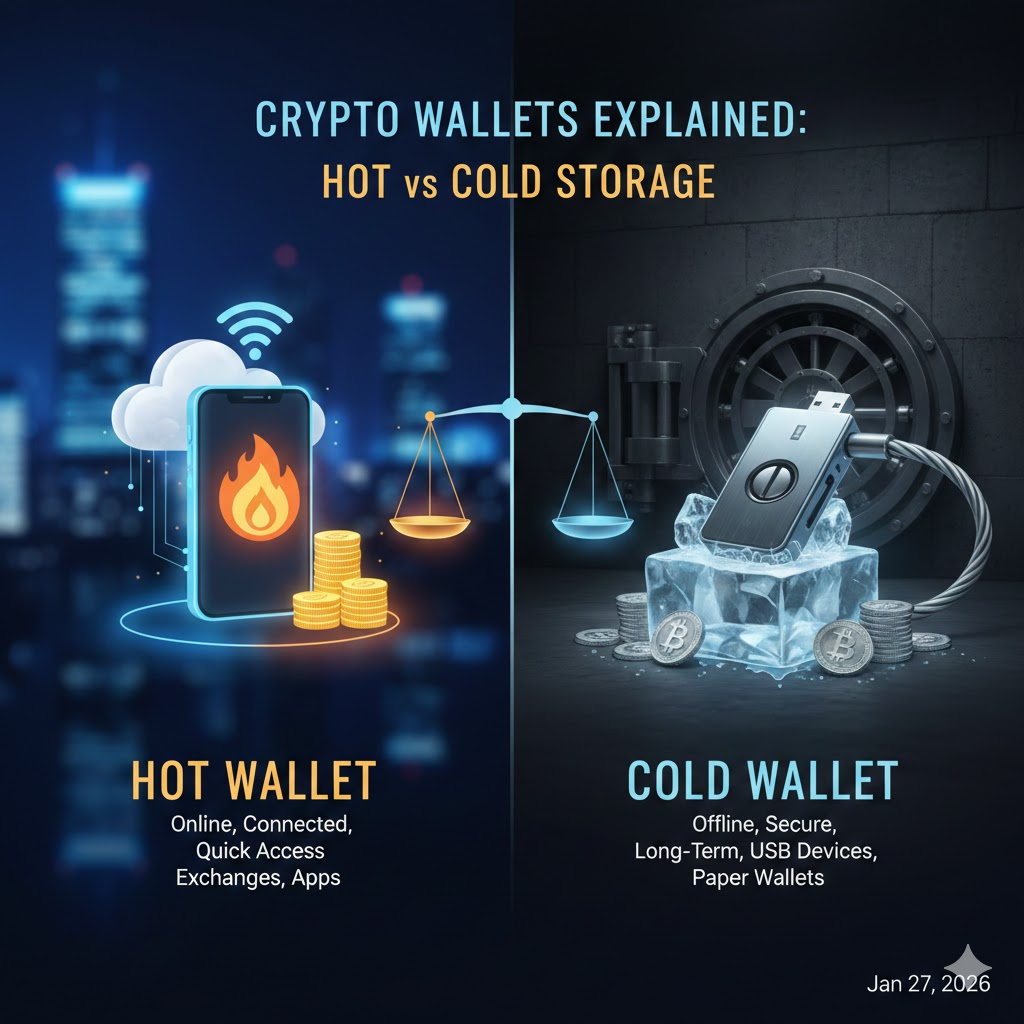
Crypto wallets generally fall into two main categories: hot wallets and cold wallets. The difference between them comes down to internet connectivity.
What Is a Hot Wallet?
A hot wallet is a crypto wallet that is connected to the internet. These wallets are designed for convenience and quick access, making them popular for daily use.
Hot wallets are often free and easy to set up, which makes them ideal for beginners.
Examples of Hot Wallets
Common types of hot wallets include:
- Mobile wallet apps
- Desktop software wallets
- Web based wallets
- Exchange wallets provided by crypto trading platforms
If you have ever kept crypto on an exchange or used a mobile wallet app, you have already used a hot wallet.
Pros of Hot Wallets
Hot wallets offer several advantages.
- Easy to use and beginner friendly
- Quick access to funds for trading or payments
- Often free or low cost
- Ideal for small balances and frequent transactions
Cons of Hot Wallets
Despite their convenience, hot wallets come with risks.
- Constant internet connection makes them vulnerable to hacks
- Malware, phishing attacks, and data breaches can compromise security
- Not ideal for storing large amounts of crypto long term
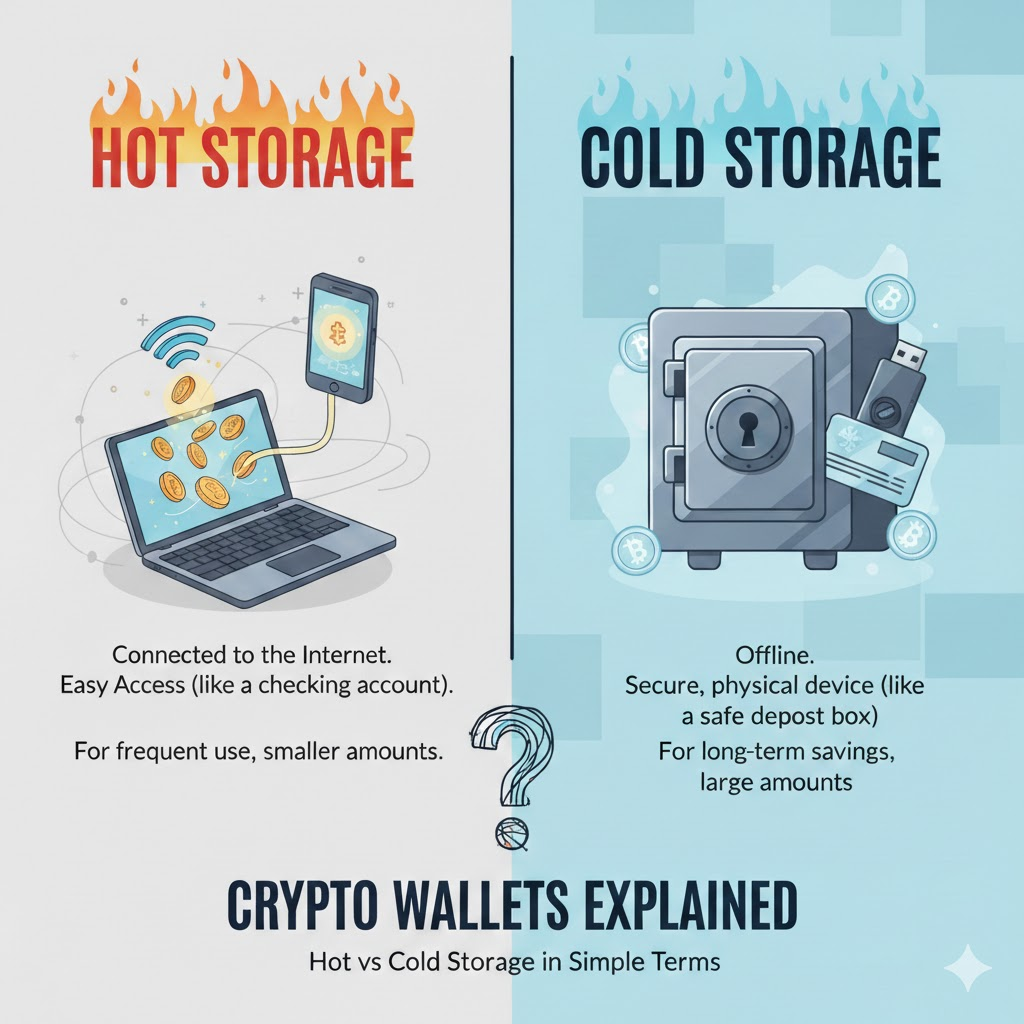
Hot wallets are best compared to keeping cash in your everyday wallet. Useful, but not the safest place for life savings.
What Is a Cold Wallet?
A cold wallet is a crypto wallet that stays offline. Because it is not connected to the internet, it offers much stronger protection against hacking and online threats.
Cold wallets are commonly used for long term storage and for holding large amounts of cryptocurrency.
Examples of Cold Wallets
Popular types of cold wallets include:
- Hardware wallets
- Paper wallets
- Offline computers used only for crypto storage
Hardware wallets are the most widely used cold storage option today.
Pros of Cold Wallets
Cold wallets are considered the safest way to store crypto.
- Offline storage protects against online attacks
- Ideal for long term holding
- Full control over private keys
- High level of security for large balances
Cons of Cold Wallets
Cold wallets are not perfect for every situation.
- Less convenient for frequent transactions
- Hardware wallets usually cost money
- Risk of loss if the device or backup phrase is misplaced
Cold wallets are similar to a safe or vault. Very secure, but not something you open every day.
Hot Wallet vs Cold Wallet: Key Differences
Understanding the difference between hot and cold wallets can help you choose wisely.
Internet Connection
Hot wallets are always connected to the internet, while cold wallets remain offline.
Security Level
Cold wallets offer higher security due to offline storage. Hot wallets are more exposed to cyber threats.
Convenience
Hot wallets are easy to access and great for daily use. Cold wallets require extra steps to access funds.
Best Use Case
Hot wallets work best for small amounts and regular transactions. Cold wallets are ideal for long term storage and large holdings.
Which Crypto Wallet Should You Choose?
The best wallet depends on how you plan to use your crypto.
For Beginners
If you are new to crypto, a hot wallet is often the easiest way to start. It allows you to learn how transactions work without a complicated setup.
For Traders
Active traders benefit from hot wallets because of quick access and seamless integration with exchanges.
For Long Term Investors
If you plan to hold crypto for months or years, a cold wallet is the smarter choice. It significantly reduces the risk of losing funds to hackers.
Using Both for Better Security
Many experienced users use a combination of both wallet types. They keep a small amount in a hot wallet for daily use and store the majority of their crypto in a cold wallet for safety.
Tips to Keep Your Crypto Wallet Secure
No matter which wallet you choose, good security habits are essential.
- Never share your private keys or recovery phrase
- Enable two factor authentication when available
- Use strong and unique passwords
- Keep backups of your recovery phrase in secure locations
- Beware of phishing links and fake websites
Taking these steps can protect you from most common crypto related scams.
The Future of Crypto Wallets
Crypto wallets continue to evolve with better user interfaces, stronger security features, and support for multiple blockchains. New solutions like smart wallets and multi signature wallets aim to balance convenience with high security.
As crypto adoption grows, wallet technology will become even more user friendly, making digital assets easier to manage for everyone.
FAQs About Crypto Wallets
What is the safest type of crypto wallet?
Cold wallets are considered the safest option because they store private keys offline, reducing the risk of hacking.
Can I lose my crypto if I lose my wallet?
If you have your recovery phrase backed up securely, you can restore your wallet even if the device is lost. Without the recovery phrase, funds may be permanently lost.
Are exchange wallets safe?
Exchange wallets are convenient but not the safest option for long term storage. You do not fully control the private keys, and exchanges can be targeted by hackers.
Do I need both a hot and a cold wallet?
You do not need both, but using a combination offers better flexibility and security. Many users store most funds in cold storage and keep a smaller amount in a hot wallet.
Is a hardware wallet worth the cost?
For anyone holding a significant amount of crypto, a hardware wallet is often worth the investment due to its strong security and peace of mind.
Can beginners use cold wallets?
Yes, many cold wallets are designed to be beginner friendly. While setup takes more time, the added security makes it worthwhile for long term holders.
Final Thoughts
Crypto wallets are the foundation of owning and managing cryptocurrency. Understanding the difference between hot and cold storage empowers you to make smarter decisions and protect your digital assets. Whether you value convenience, security, or a balance of both, choosing the right wallet is a key step in your crypto journey.